Chapter 1 : Intervention
The project begins with the tenement as its primary typology, using 97 Orchard Street as both a site and lens. In Chapter 1, observations were grounded in walking Orchard Street and registering how space is experienced at the scale of the body. Simple everyday moments such as chairs stacked on the sidewalk, fire escapes cutting across façades, rigid building edges meeting the street, revealed a city shaped by vision. While the urban fabric is physically fixed, the experience of moving through it is anything but static.
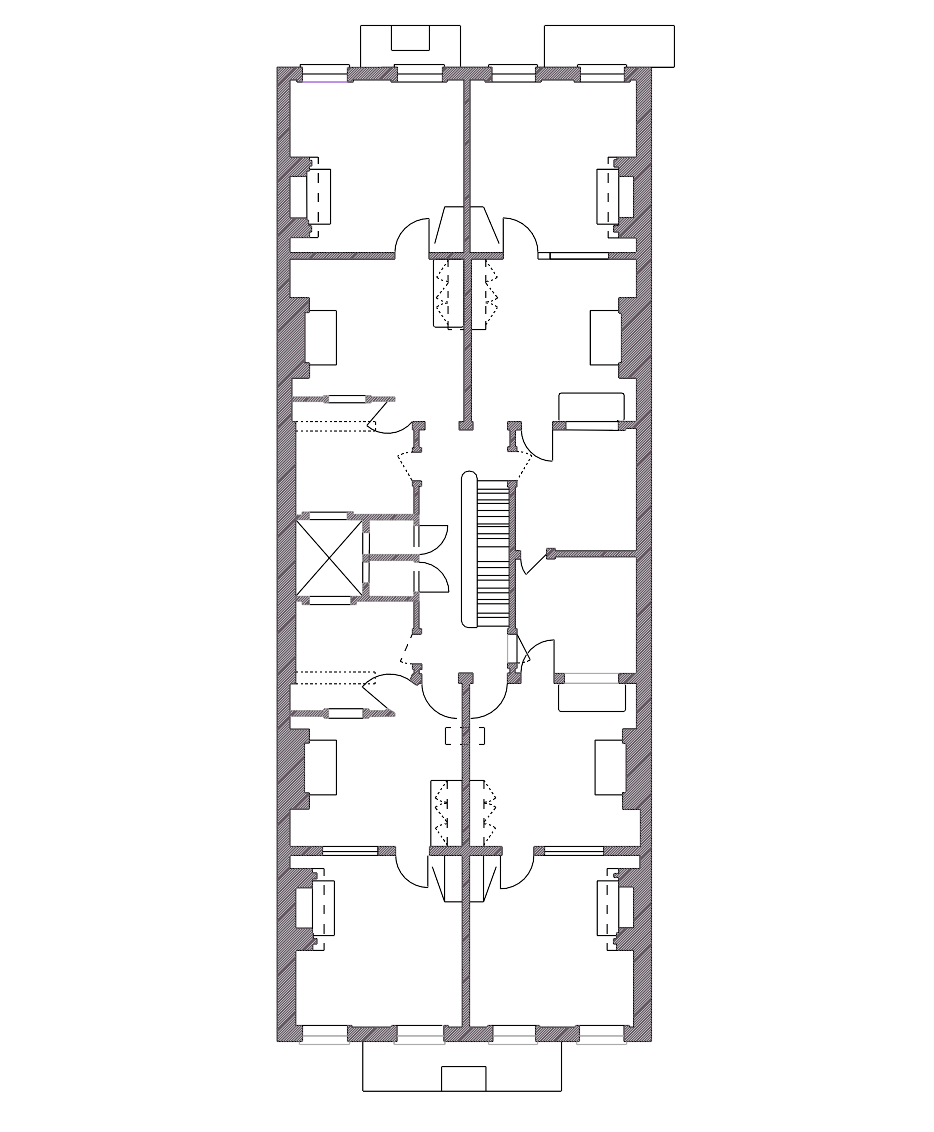
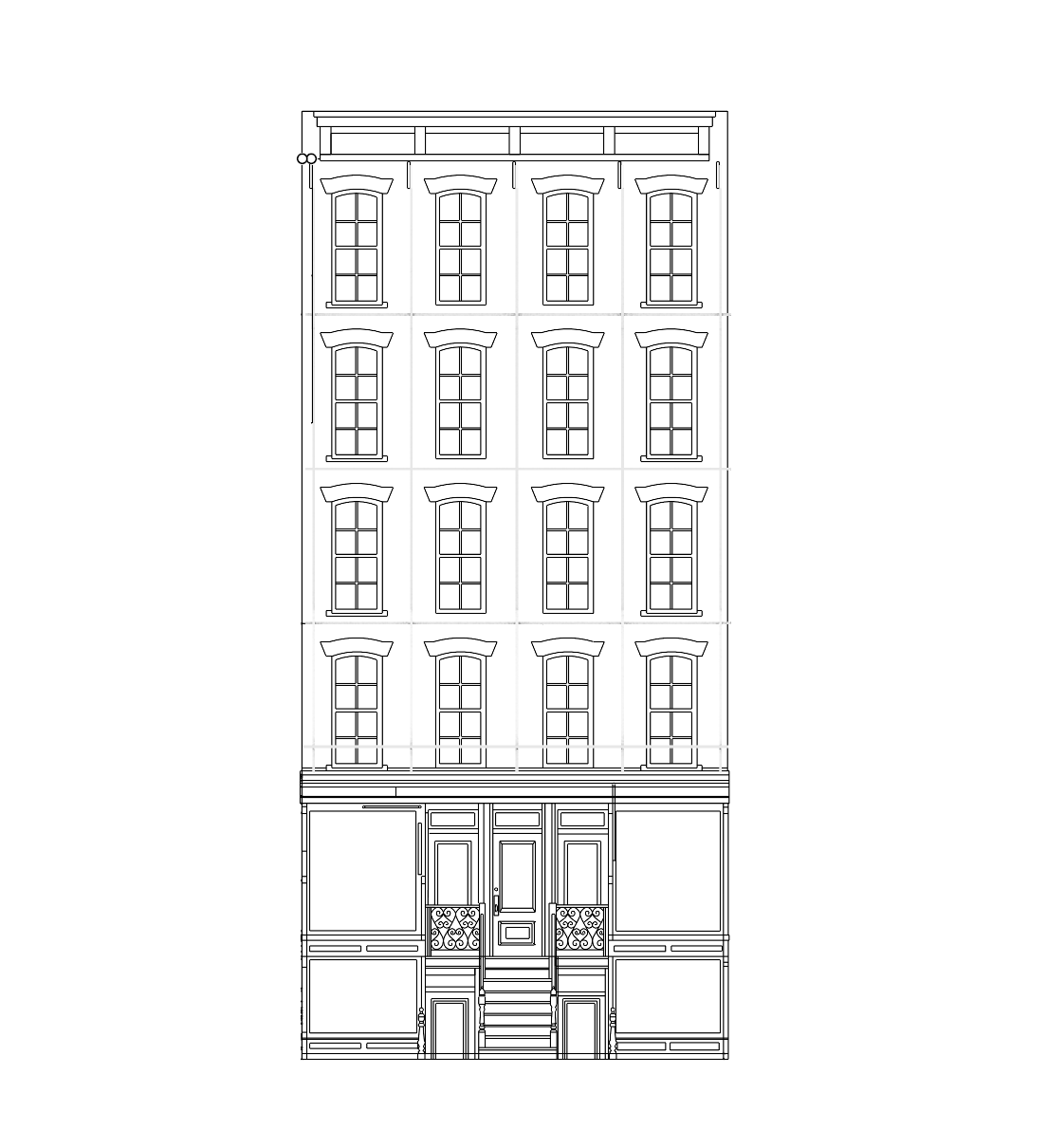
Navigating the New York City grid produces a series of shifting perspectives. Although the city is organized around straight lines and orthogonal order, it is most often experienced through low, oblique views: looking up at fire escapes, glancing across façades, or moving diagonally through tight streets. As the body moves, perspectival lines begin to fold into one another, creating visual dynamism within a formally rigid system. These overlapping views became a central focus of the project.
From these observations, a conceptual framework emerged around the tension between the rigid city grid and the oblique, embodied experience of moving through it. This framework draws on Bernard Tschumi’s Manhattan Transcripts as a methodological reference, using drawing and diagramming as tools to analyze time, movement, and space rather than fixed form. Lines were extracted from site photographs, collages, and drawings, not as representations of buildings, but as traces of sight lines, trajectories, edges, and moments of overlap.
The first diagrams operate as field condition studies, translating the verbal narrative of the Orchard Street collage into a visual system. These drawings are not illustrative, but serve as an analytical tool to identify patterns, intensify relationships, and establish a formal vocabulary. Rigid, straight field lines are traced, selected, and extracted, forming a geometric framework that becomes the basis for further exploration.
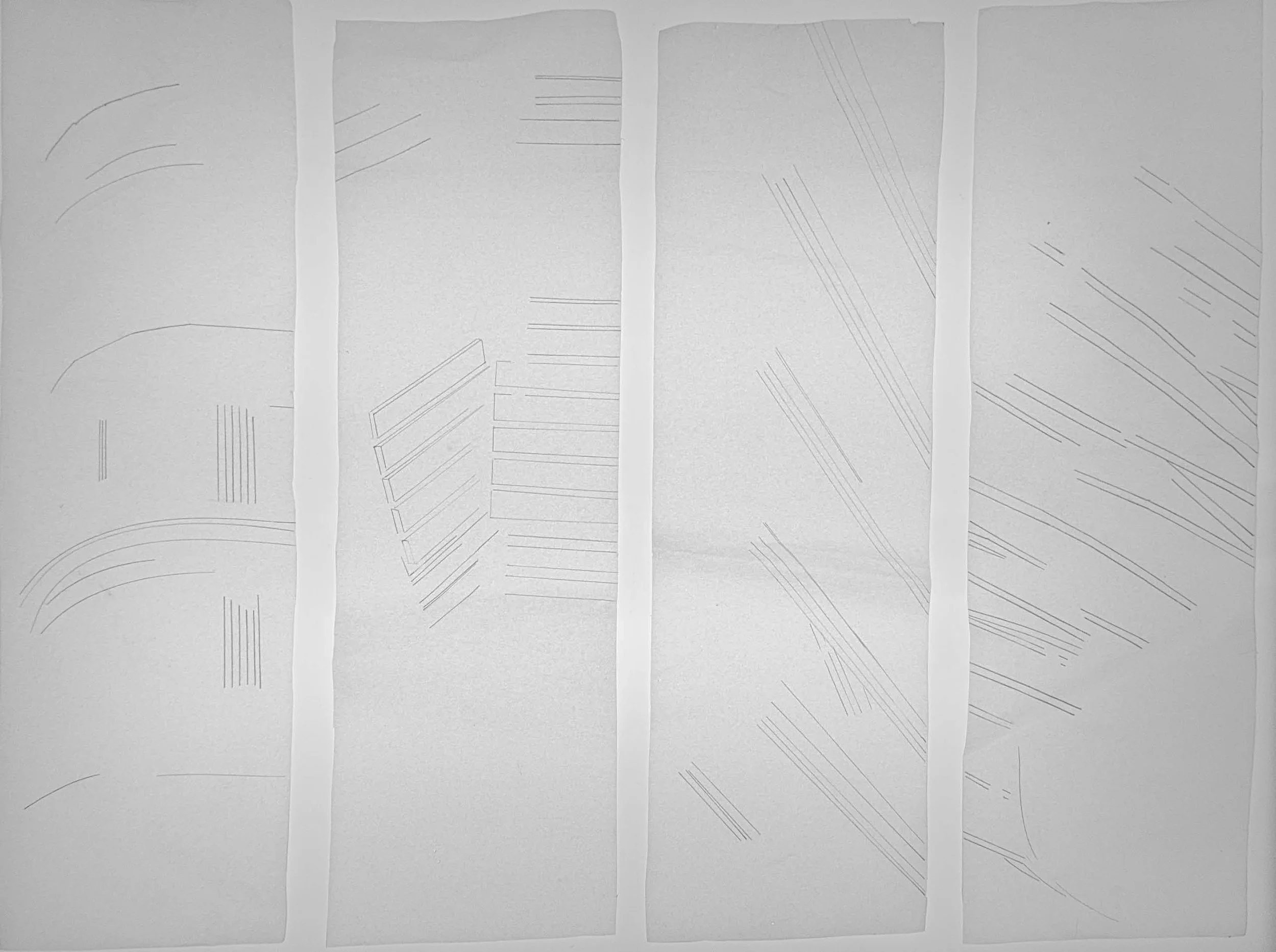
These diagrams are then translated into a three-dimensional “proto-architecture” that functions as a study model, sketch, or sculptural object. Using a rule-based approach, each cut, fold, and weave corresponds directly to a line in the drawing: construction lines, sightlines, and paths of movement. Only lines that proved spatially productive were extracted, allowing the model to emerge through processes of folding, cutting, and layering rather than composition
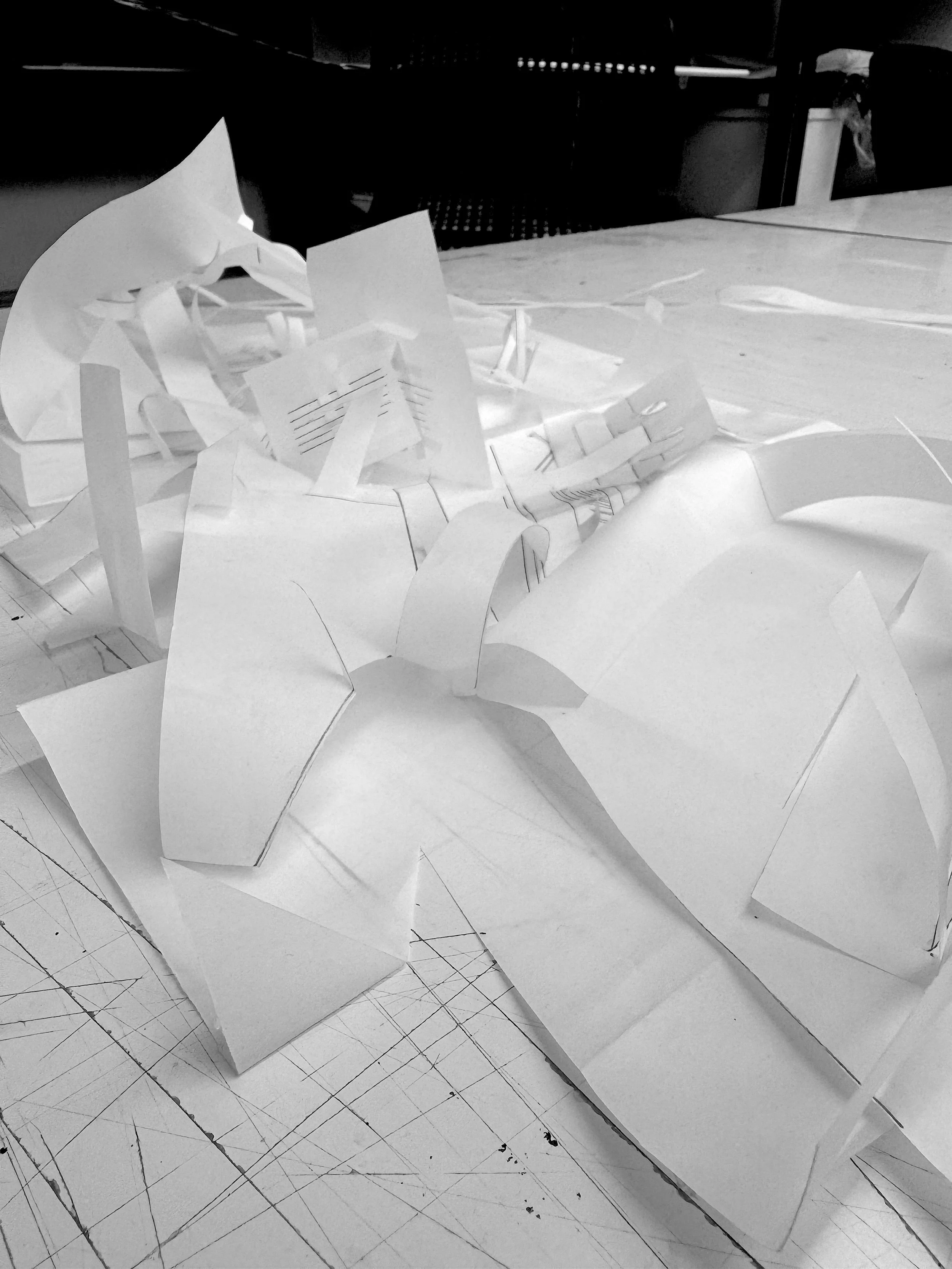
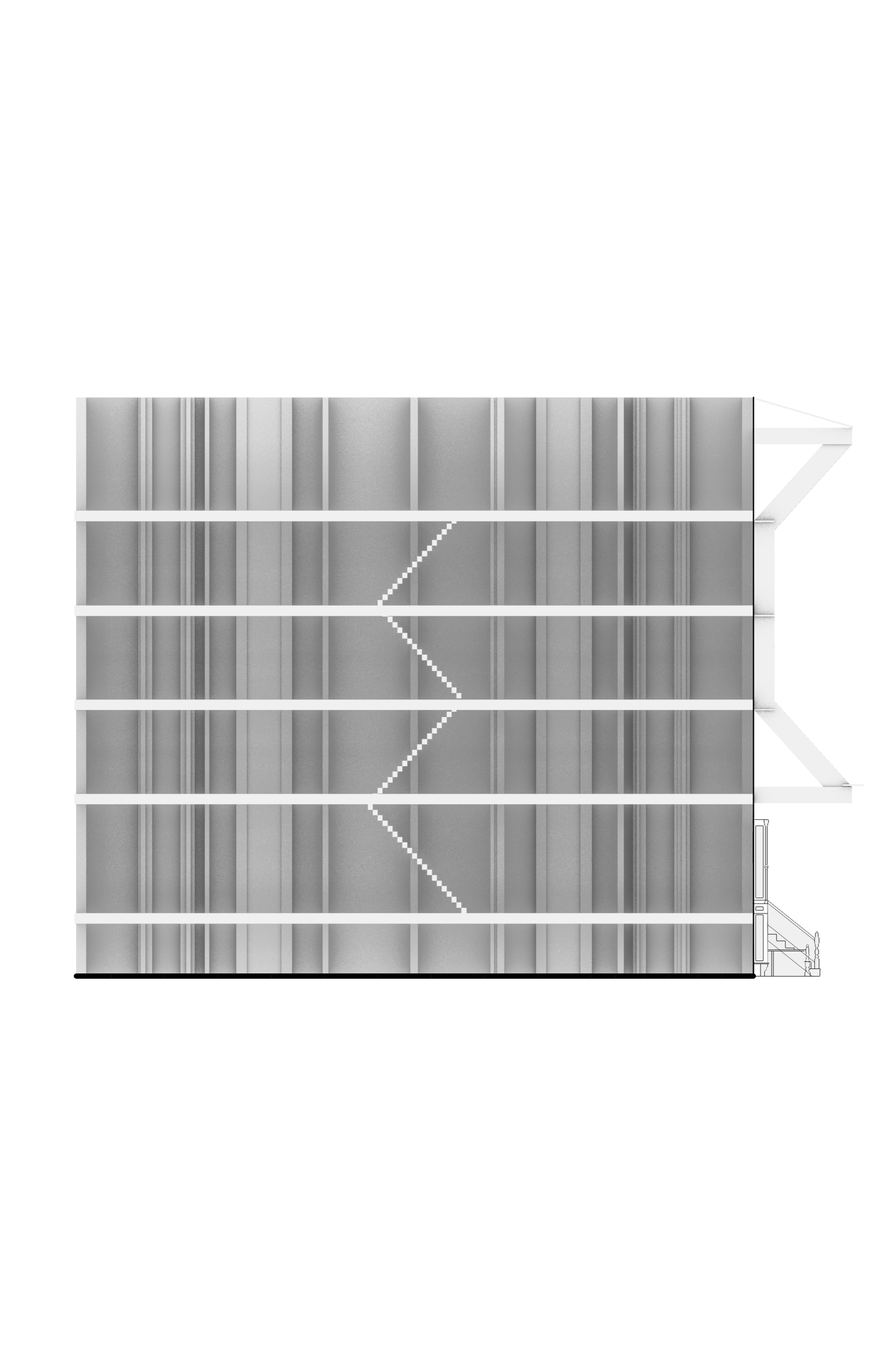
This proto-architectural logic ultimately informs an intervention at 97 Orchard Street. Conceived as a conceptual installation, the intervention mediates how people see into and out of the building and how they move through its ground floor and circulation. A folded plane operates like a mask, floating in front of the façade and folding into the interior at the entrance, producing an architectural experience that alters vision and motion. Rather than offering a single viewpoint, the installation reinforces the project’s core idea: space is continuously redefined through movement, perception, and occupation, almost like looking at a fire escape in the lower oblique.
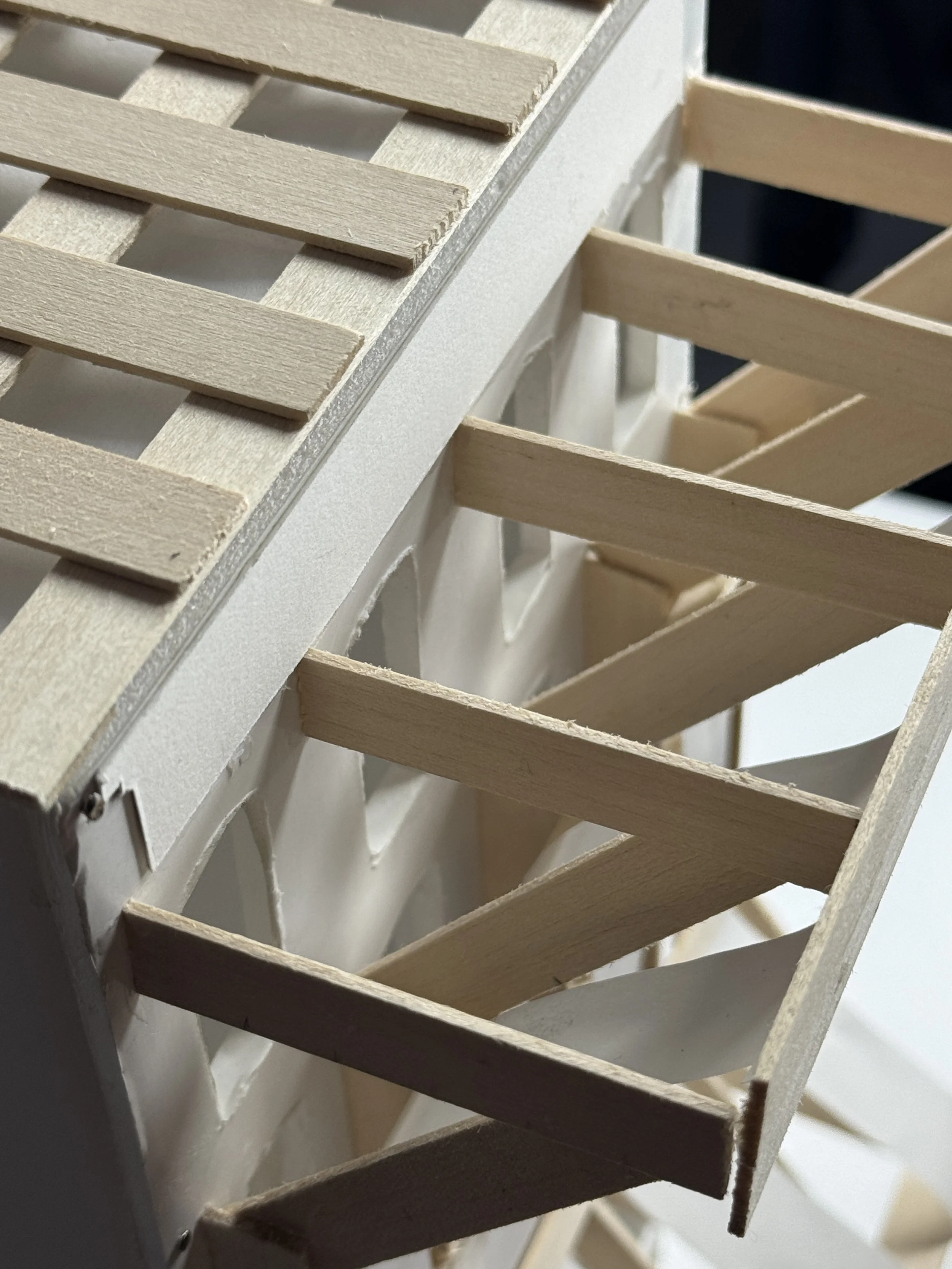
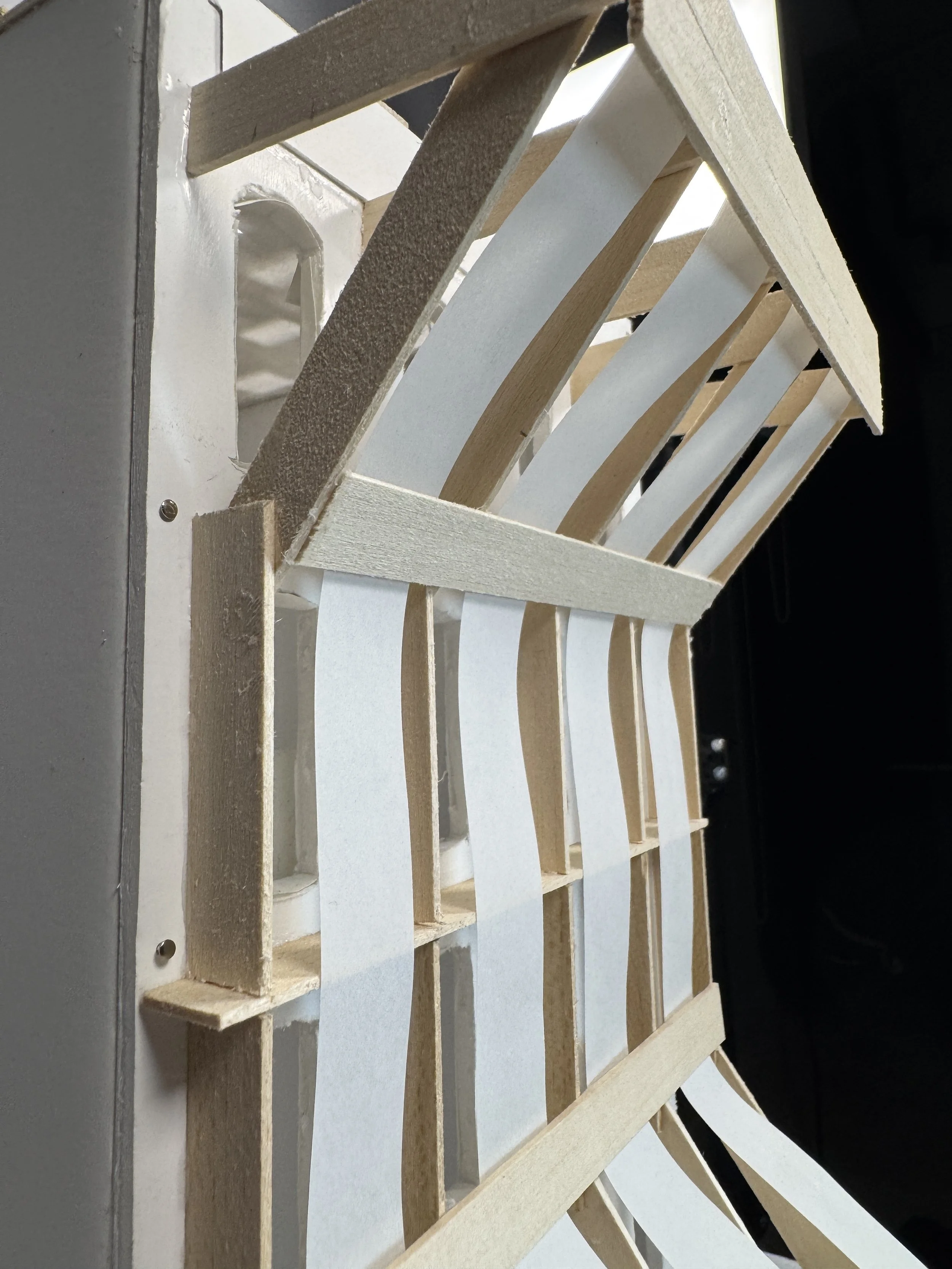
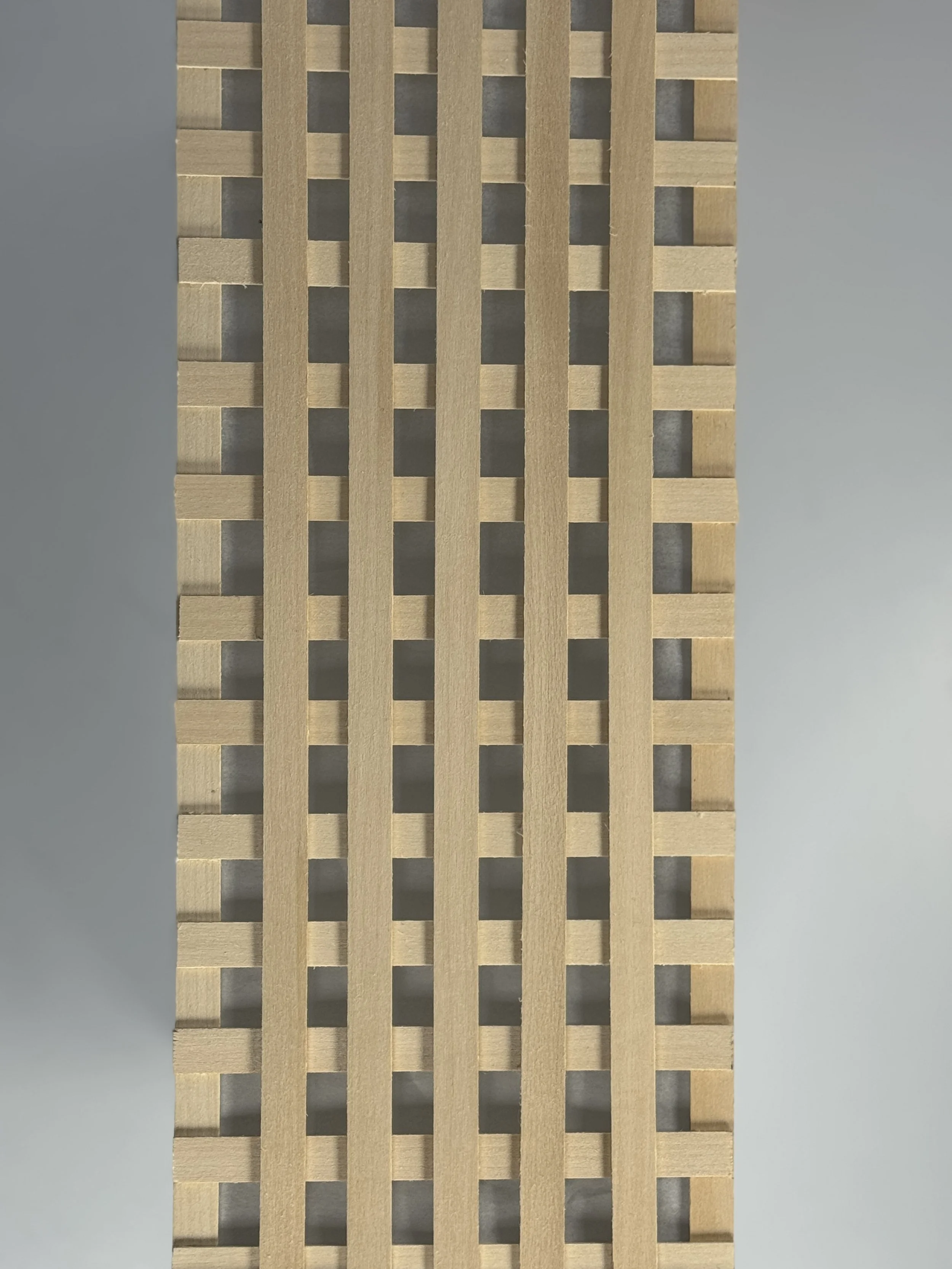
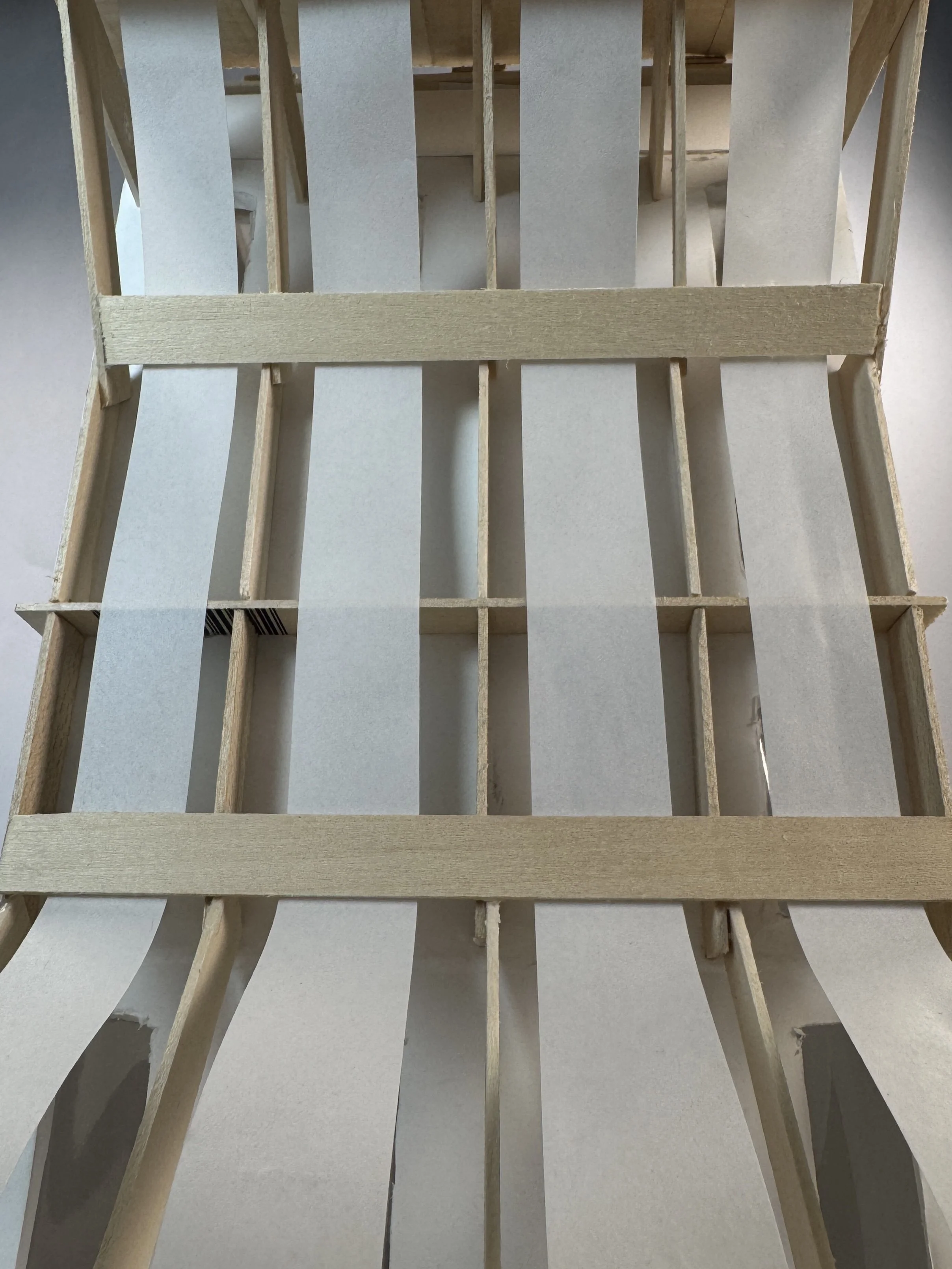
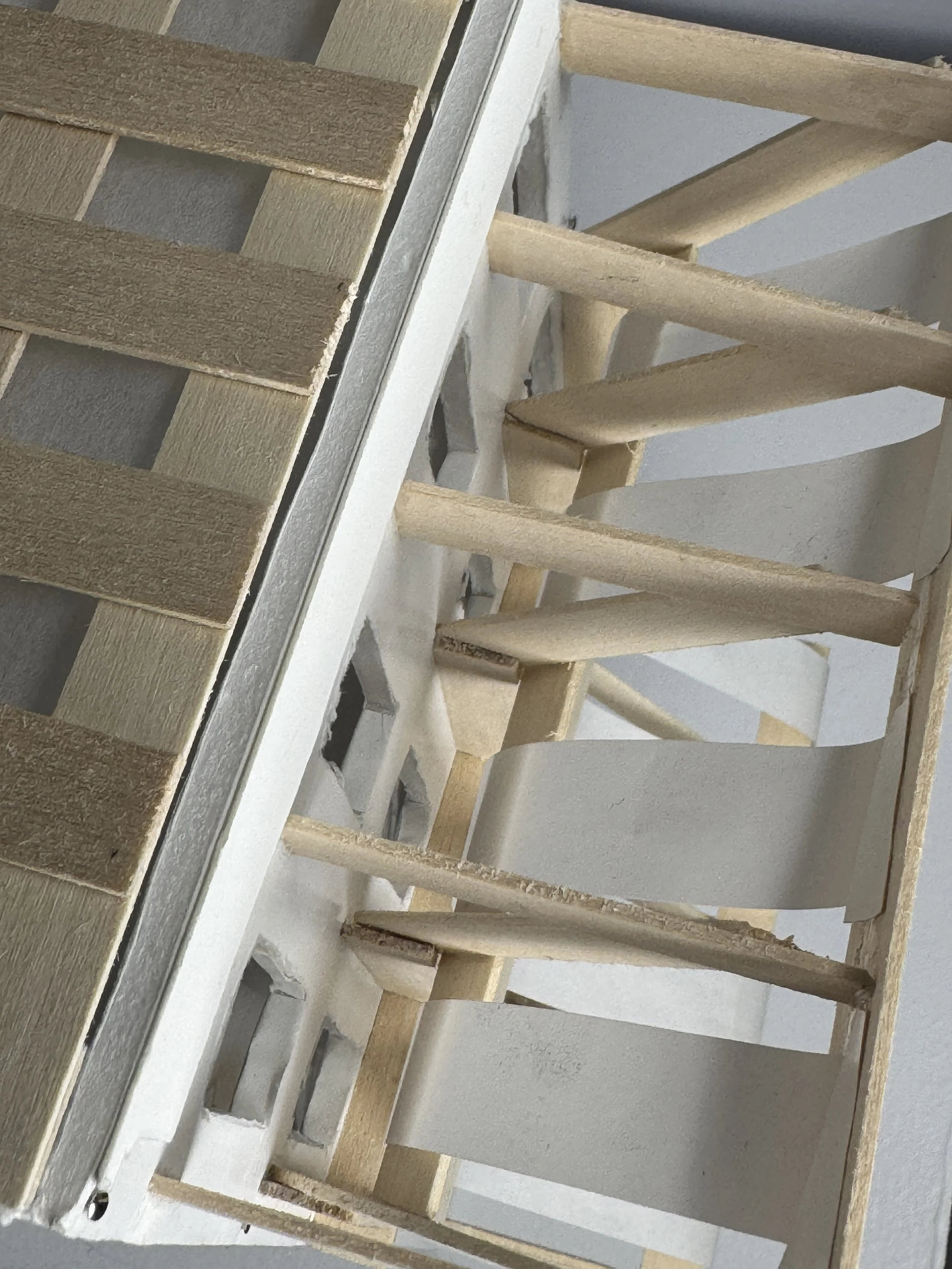
The façade intervention demonstrates how the project’s diagrammatic ideas can be extended when built at the scale of the model. Made in basswood, the grid-like roof structure is pulled down into the façade, as if the roof were slipping or bleeding into the building’s face. The façade itself remains organized by a rigid, repetitive grid, referencing both the tenement typology and the New York City grid, but the protruding elements at the façade introduce depth, shadow, shade, and protection. Woven paper panels are inserted within this paneled framework, acting as a permeable layer that diffuses light while also projecting outward to function as a shallow awning. Rather than simply opening the façade, the intervention filters light and vision, softening the transition between interior and exterior. In doing so, it responds to one of the central failures of tenement housing (the lack of daylight) while preserving a sense of enclosure. As the grid thickens and folds into space, it shifts from a flat ordering system into an active three-dimensional surface, mediating between static structure and dynamic experience and intervening into the tenement typology.