Chapter 2 : Body
Chapter Two shifts scale from the city and interior to the body. This part of the project looks at wearables as architectural experiments and as prosthetic devices : objects that change how the wearer sees, moves, feels, and is read by others. Garment-making becomes a way of studying the body as architecture into a much more intimate and personal space. The garment is informed by the history of piece work: home-based garment labor that shaped everyday life in tenement buildings throughout the 19th and early 20th centuries. At 97 Orchard Street, domestic space was never just domestic : it was also a site of production.
Formally, the garment sits between a 19th-century silhouette and contemporary New York streetwear, aligning with the moment when the tenement at 97 Orchard Street was designed and built. Historical references are paired with observations from present-day Orchard Street, using street observation to locate the work within the visual language of 21st-century New York City.
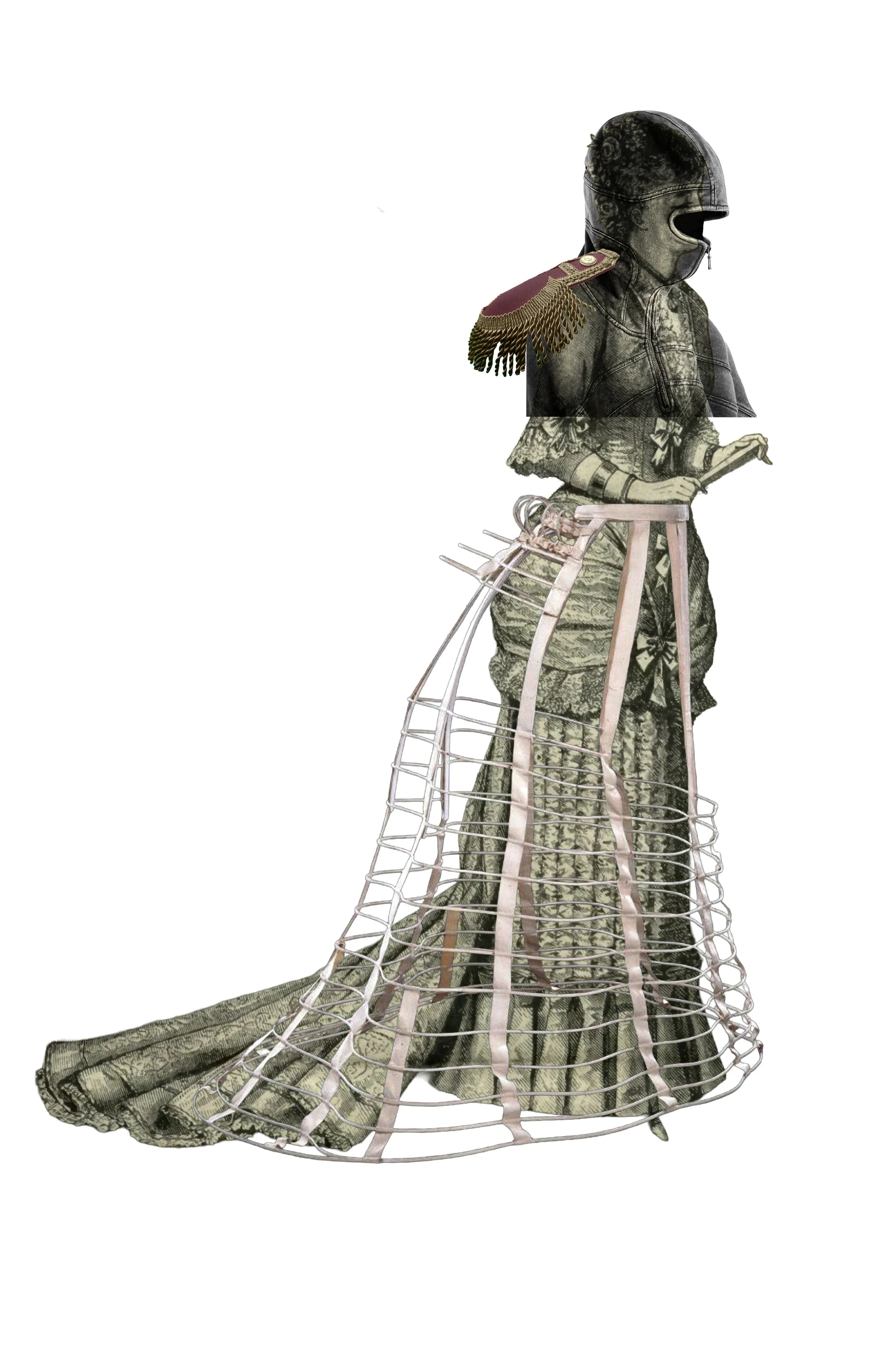
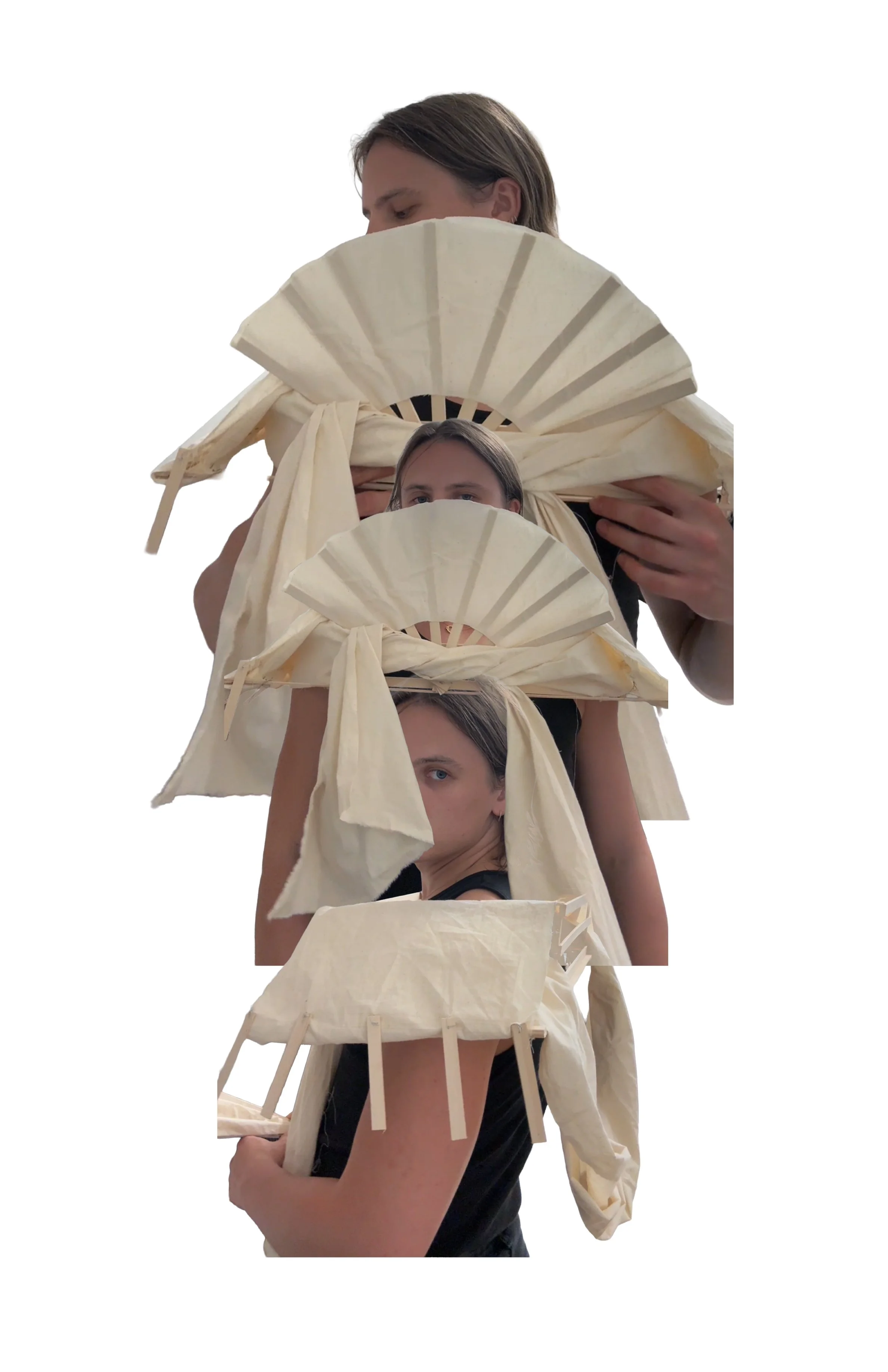
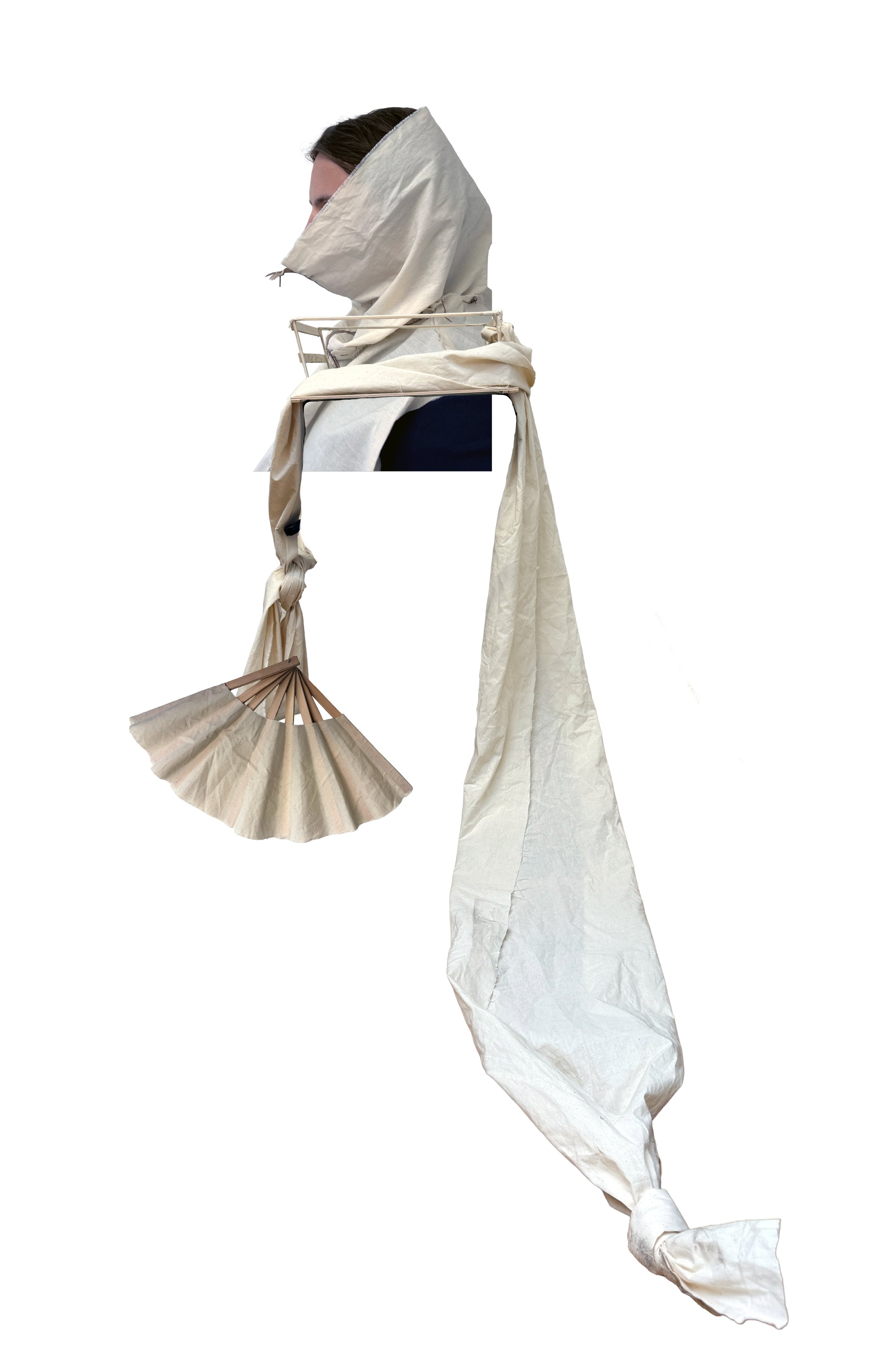
The crinoline (historically used to produce an exaggerated feminine form) is reworked as a rigid, almost armor-like structure. Instead of emphasizing the hips and waist, volume shifts upward toward the shoulders and chest, disrupting expected gendered proportions. A train, usually trailing behind the body, wraps forward like a cravat, while a fan-like base partially obstructs the wearer’s view. Elements of contemporary clothing are folded into the garment, blurring boundaries between masculine and feminine, historical and contemporary, labor and leisure.
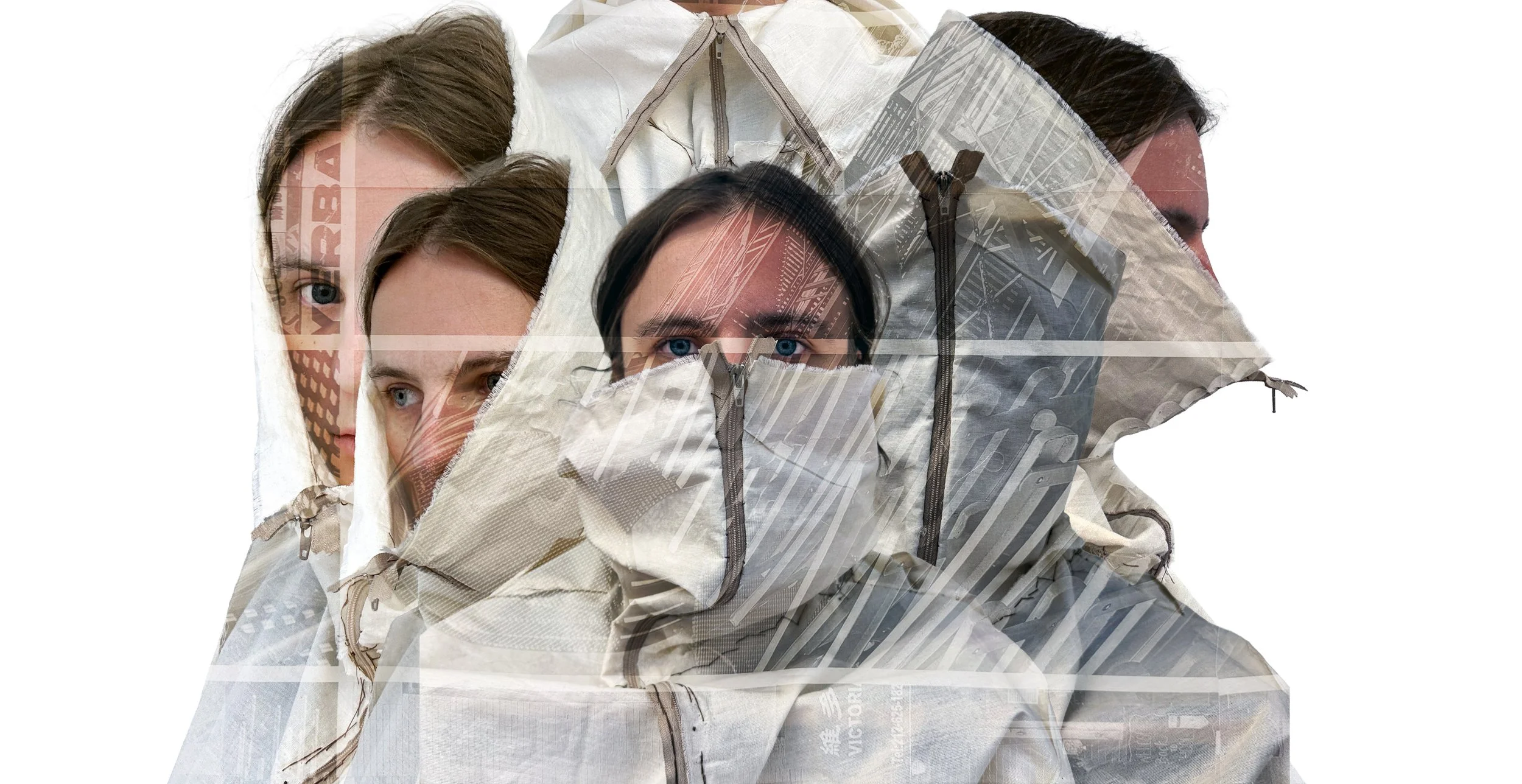
A collar-hood functions as both garment and prosthetic. It can be pulled up to partially or completely block vision, changing how the body moves and how space is perceived. At times the wearer becomes highly visible through exaggerated form; at others, the face is hidden, producing moments of anonymity or disappearance. Vision is blurred, and with it, perception of self and of space.
Extending the ideas from Chapter 1, this chapter treats architecture as something worn rather than entered. Space is no longer fixed or external, but embodied and experienced. The garment becomes a portable interior, shaped by the body that occupies it.