Chapter 3 : Program
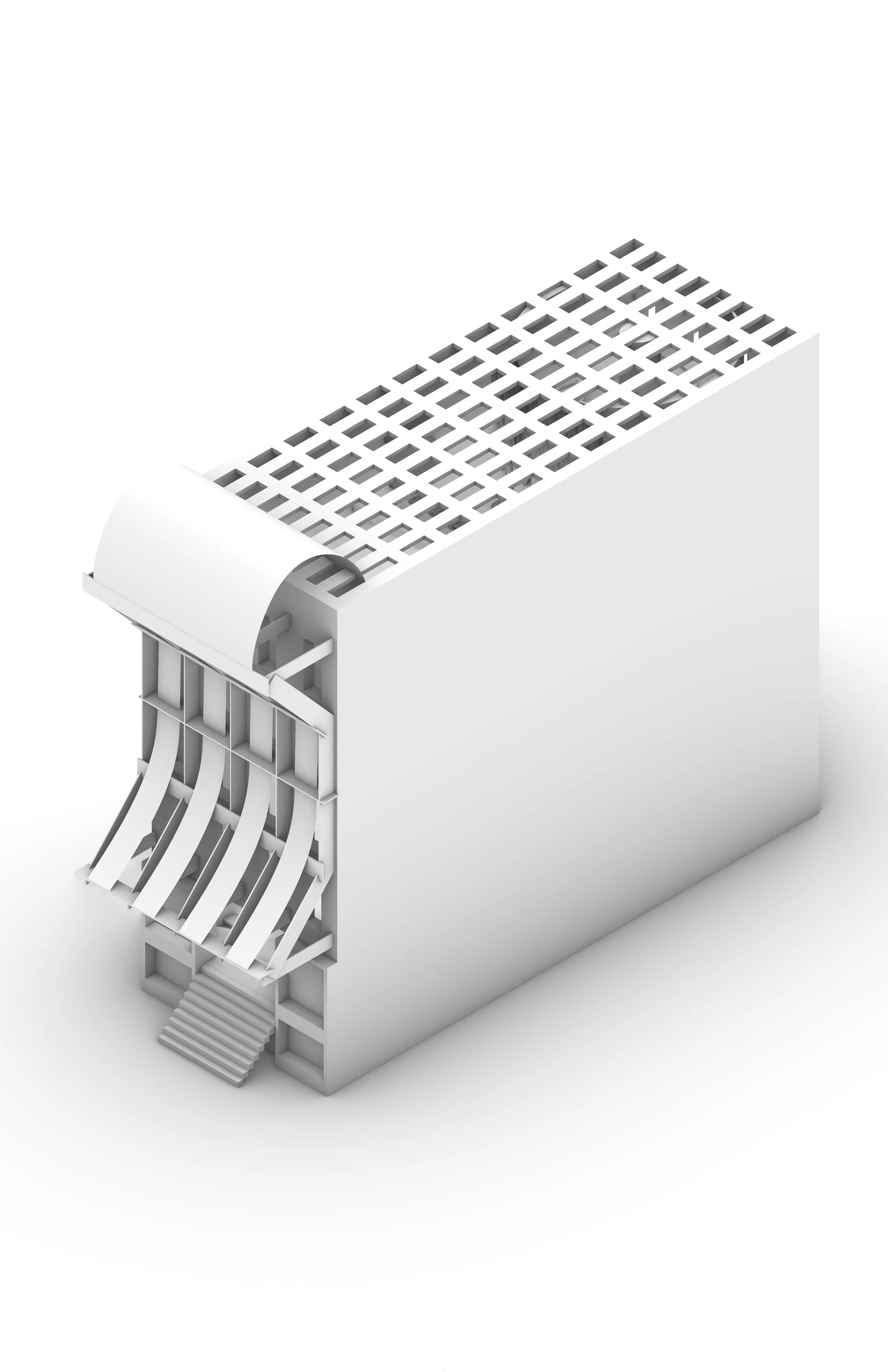
Chapter Three of the projects investigates how spatial experience shifts as a function of occupation, perception, and use. Working within the interior of the historic tenement building, the intervention preserves the original floor organization as much as possible while strategically carving out space to introduce light through the grid roof, an element largely absent from the original historic tenement building typology.
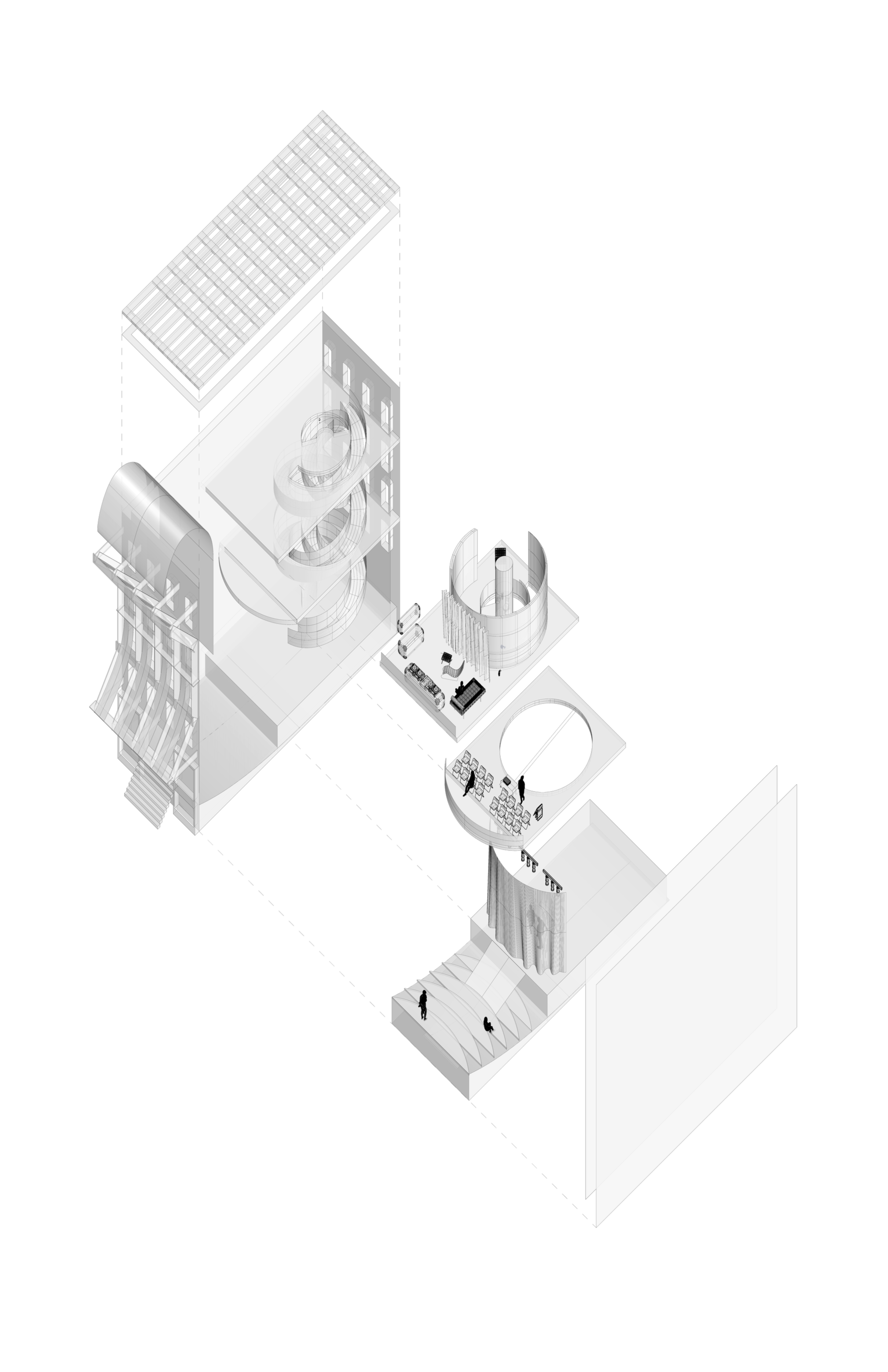
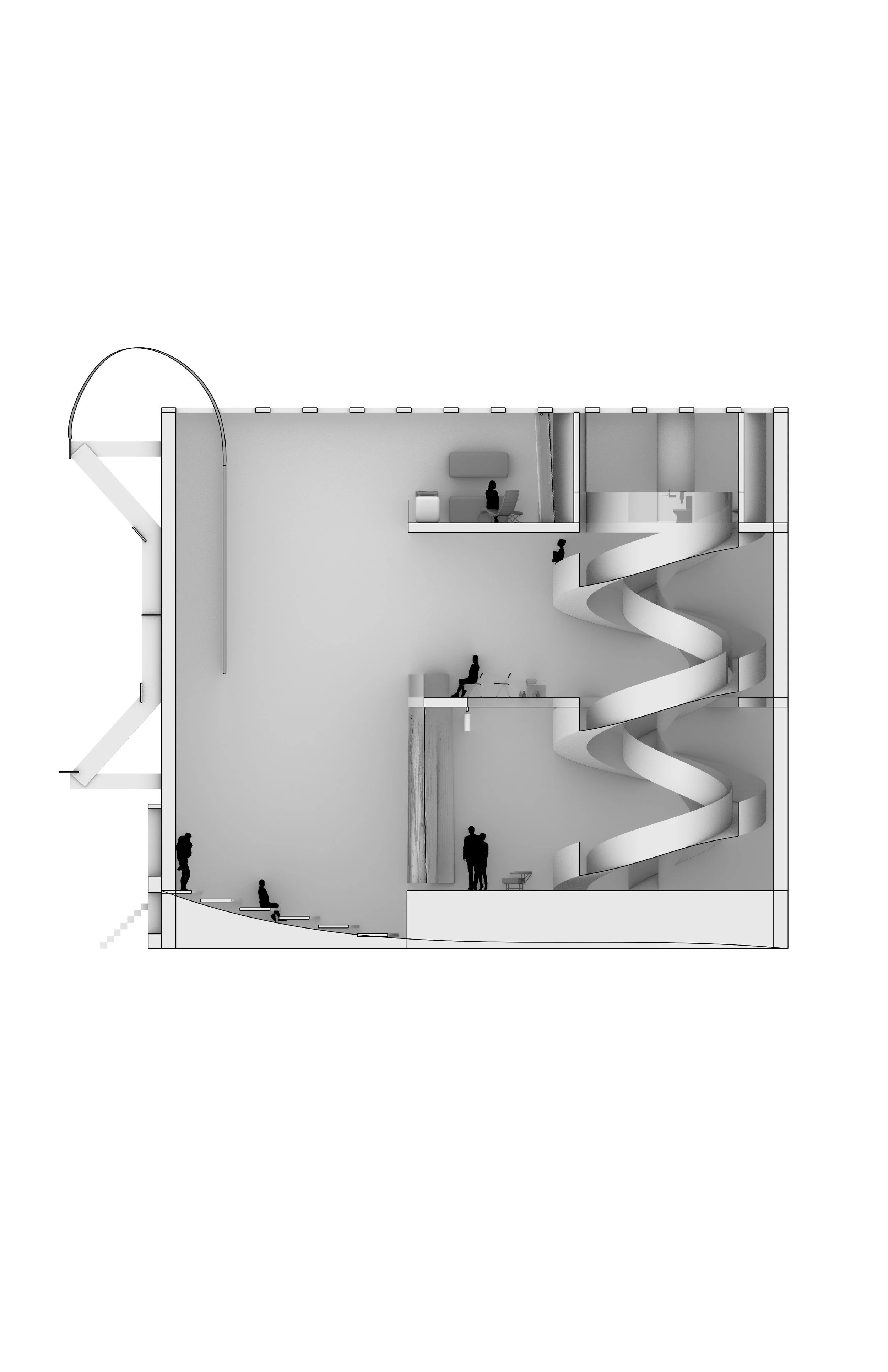
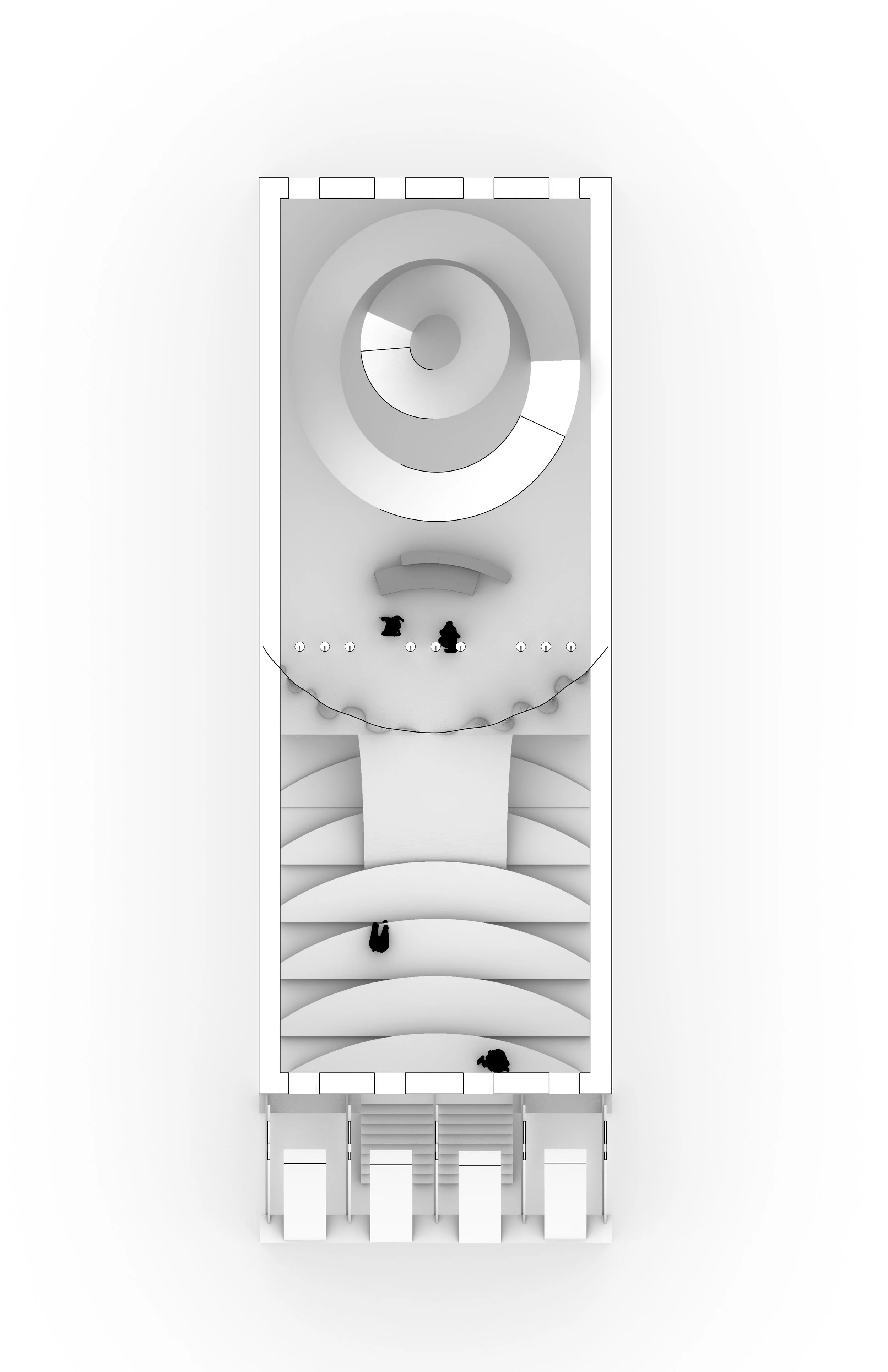
Each floor is designed for multi-faceted use rather than a fixed program. The ground floor operates as a stage, auditorium, dance floor, or exhibition space. The second floor shifts in relation to the ground below, functioning alternately as a balcony overlooking performances, an orchestra pit, or a film screening platform. The third floor is conceived as an artist residence, introducing temporary domestic occupation into the public interior.
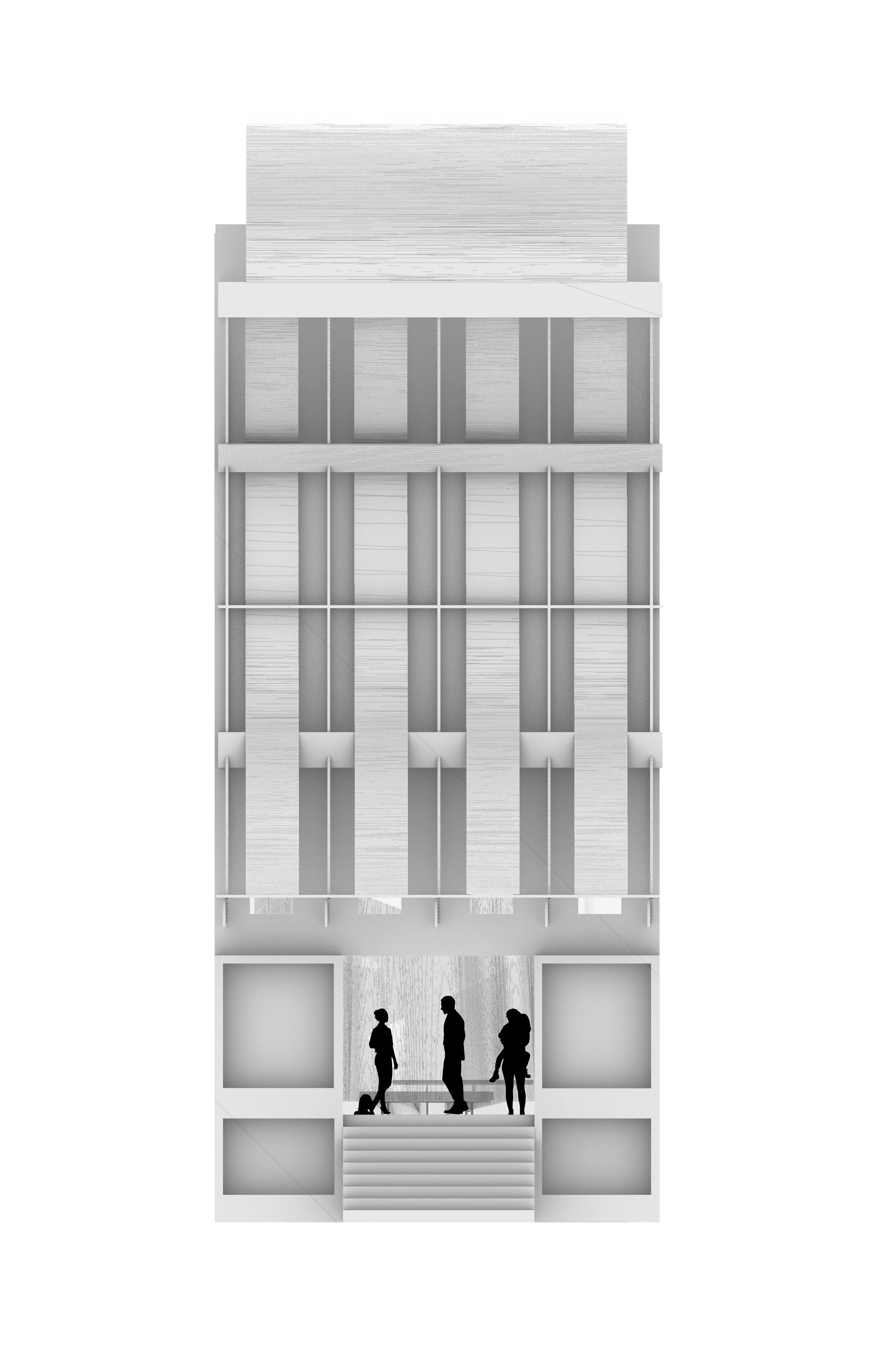
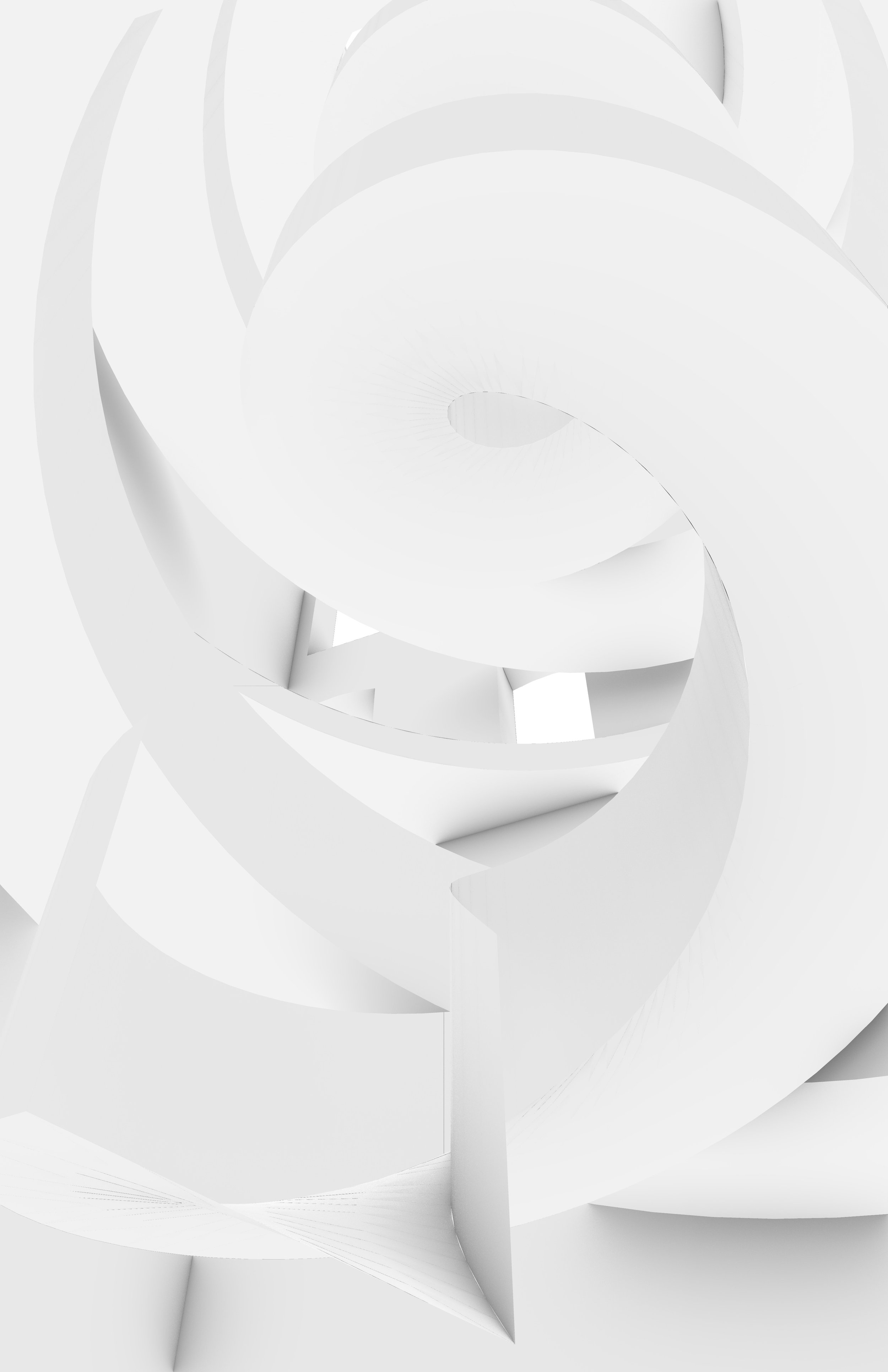
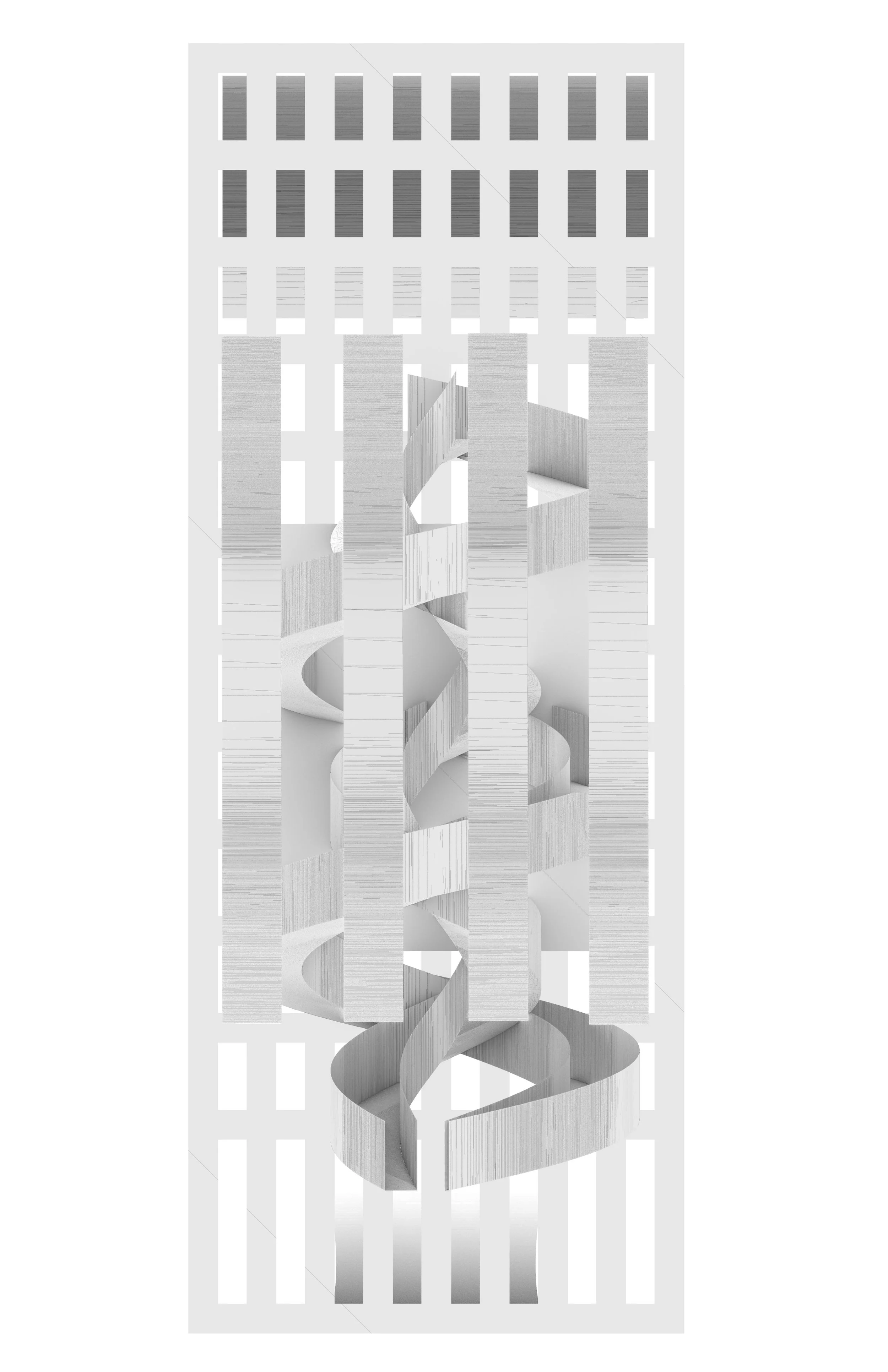
A ribbon staircase becomes the primary architectural gesture. Derived from the rigid linear traces visible in the building’s elevation, these lines are bent, thickened, and pulled into the interior, transforming static structural logic into a continuous, dynamic spatial sequence. The staircase acts not only as circulation, but as a device that reframes views, compresses and releases space, and connects modes of perception. Former straight, rigid lines are now bent and compressed.
At the core of the project is a residency model: artists, directors, and musicians temporarily inhabit the tenement, shaping the space through their practices. A director reorients the building toward cinematic projection; a DJ transforms it into a performative dance environment. The architecture becomes a curated framework, continually reinterpreted by its occupants. The exploration challenges static notions of program and perspective. It proposes space as something activated by people rather than predetermined by form, embracing dynamism, multiplicity, and the need for “third spaces” that resist singular readings. The tenement becomes not just a container for activity, but a shifting lens through which space is continuously re-experienced and re-interpreted by changing perspective.